
I am a marathoner. This is something I have to keep telling myself to make myself believe that in May I will be running the Liverpool marathon. It’s still hard to believe that in 17 weeks I should be able to run my first ever marathon. I am very nervous however, attending lectures with 20 other students has boosted my confidence a little.
Lectures this week have been aiming to help us encourage new habits and to change our behaviour. This lecture was much needed considering I am the most unmotivated and lazy person to ever exist. Making myself get up and go for a run has been one of my biggest challenges yet however, lectures so far have helped with that. During the past week, I have been trying to apply the habit loop and aspects of the MINDSPACE report to my training.
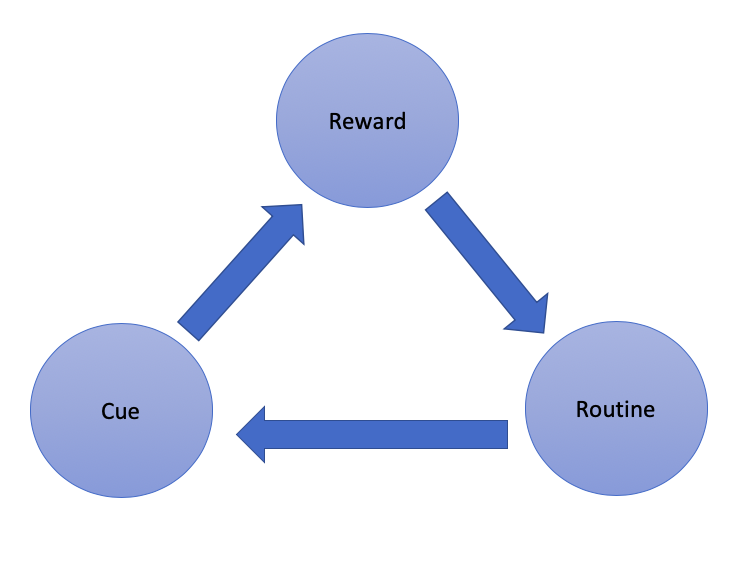
The habit loop involves having a reminder, a routine and a reward. During the past week I have printed out my marathon training plan and now have it on my door. By doing this I have to see the plan every day and it acts as a visual reminder for me to go on a run. The next part of my habit loop is actually going for a run in the cold Welsh weather. This should eventually form the habit behaviour. Finally, after going for a run I will reward myself with a chocolate milkshake which I can whip up in seconds. The chocolate milkshake acts as a motivator for the brain to remember the routine. If the brain gets a reward then it will be more likely to start the habit so it gets a reward more frequently. Research suggests and I believe that the quicker you receive the reward the better. This treat keeps me motivated during the run and helps to make me go on them in the first place.
MINDSPACE is made up of 9 letters which stand for words related to habits and changing behaviour. I have managed to apply the words incentives, priming and commitment so far in my training. Incentives or rewards can be used to help reinforce behaviours that we want to continue to do. Reinforcers are affected by the magnitude, timing and type which refer to the size, delay and type of reinforcer. In relation to my training, having a milkshake at the end of the run is effective as a reinforcer. This is because I can make one straight after my run and not much effort is needed to make it. Also, I don’t have them all the time so it will be less likely that I am satiated by that reinforcer (Miltenberger, 2014).
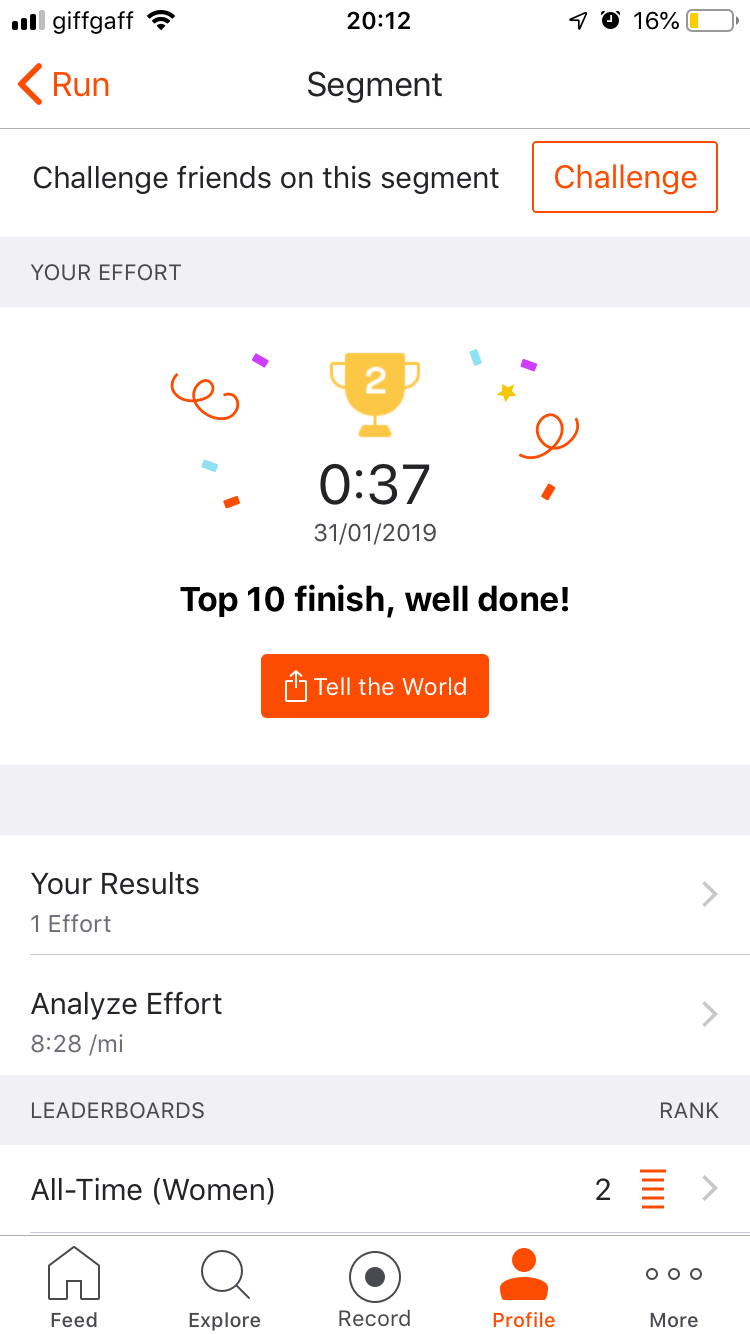
Another reinforcer I use is strava which logs all my previous runs. I can reflect on these runs to see how far I’ve progressed which helps to keep me motivated. I can also compete against other people on runs to get the fastest time in certain areas. On Thursday I got second place out of all women running up a hill which I am now determined to be first in.
Priming refers to our brain being influenced by subconscious cues. An example of this would be subliminal advertising. People are subjected to a stimulus such as a food brand without knowing. They will be more likely to go and buy this product when they see it next as shown by Verwijmeren et al. (2010). I have tried to replicate this by moving by trainers next to my bedroom door and by having my marathon training plan in clear view. These cues will then stimulate my brain and influence my behaviour to go for a run.
The final word is commitment which involves making plans for a long-term goal. Commitment works better if you make it public as well. This is because it creates a support system for you and others to achieve your goals . Furthermore, you want to avoid the embarrassment of not completing the goal you have made public. I find this very relatable as I have told almost everyone I know that I am running a marathon and don’t want to look like a fool by pulling out. Also, I have just paid for my first half-marathon and don’t want to lose £40 by pulling out. These commitments are motivating me to keep training, just so I can avoid the embarrassment..
We have only had one psychology content lecture so far this semester but I think it has helped a lot in my training. I feel a lot more motivated to go for a run and I now have a set marathon plan to follow. Fingers crossed I can keep it up!!
References
Duhigg, C. (2014). The power of habit: Why we do what we do in life and business. Toronto: Anchor Canada.
Halpern, D., King, D., Vlaev, I., & Hallsworth. (2010, March 2). MINDSPACE Influencing behaviour through public policy. Retrieved from https://www.instituteforgovernment.org.uk/sites/default/files/publications/MINDSPACE.pdf
Mayhew, G. L., & Anderson, J. (1980). Delayed and Immediate Reinforcement. Behavior Modification,4(4), 527-545. doi:10.1177/014544558044007
Miltenberger, R. G. (2014). Behavior Modification: Principles and Procedures. (6th Edition). Cengage Learning.
Turner-Mcgrievy, G. M., & Tate, D. F. (2013). Weight loss social support in 140 characters or less: Use of an online social network in a remotely delivered weight loss intervention. Translational Behavioral Medicine,3(3), 287-294. doi:10.1007/s13142-012-0183-y
Verwijmeren, T., Karremans, J. C., Stroebe, W., & Wigboldus, D. H. (2011). The workings and limits of subliminal advertising: The role of habits. Journal of Consumer Psychology,21(2), 206-213. doi:10.1016/j.jcps.2010.11.004
 Georgie's Running Blog