
Only a month left of training before the marathon and I feel way too chill. Keeping up with the running has been difficult over Easter but I have been sticking to my new training plan. Going home and having a new change of scenery has helped a lot because running in Bangor was getting a little boring.
As race day is getting so close I decided to come up with a game plan as they have been shown to be very effective and helpful for events. Arruza et al. (2009) showed that increased perceived development of a game plan increases resultant satisfaction of the event. Game plans focus an athlete’s attention on the things that are most important regarding the race event. A game plan is something I can refer back to at the start of the race to focus on the marathon and get in the right frame of mind. I can do this by making a specific goal I want to complete for the race for example, finishing the marathon in under 5 hours. I can segment the race into sections and focus on each section and the performance goal for each part for example, splitting the marathon into 10k sections. Incremental goals will help to maintain my motivation and will prepare me for what is next in the race (Avolio & Hannah, 2008).
A game plan also has to be unique to the individual and the race they are doing. Everyone and every race are different so to get the best out of the athlete the plan must be tailored to them. This way the athletes form and efficiency are maximised so they can perform their best. For example, I have been studying the route of the Liverpool marathon and I know areas where I can perform better than others. This means I can focus more on the areas where I can boost my performance during the race and prepare in the last month for the areas where I may struggle.
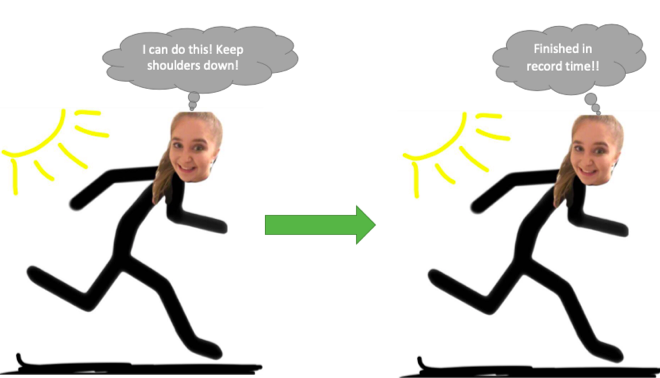
These plans also involve the use of positive self-talk during the race event. During my runs I have been practising my positive self-talk which has helped me keep running for longer and focused my attention more during runs. Positive self-talk has been shown by Hatzigeorgiadis et al. (2011) to improve the performance of athletes. It will also help me to maintain my effort over the gruelling 26.2 miles. Furthermore, it is important to use mood words. Mood words will help set the mood of the performance so hopefully the more positive, happy and optimistic I feel, the better my performance will be on the day.
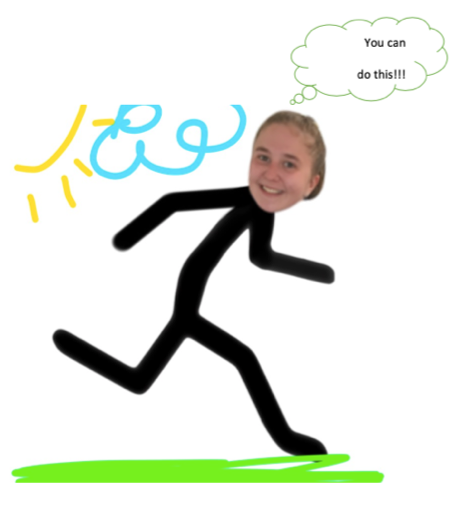
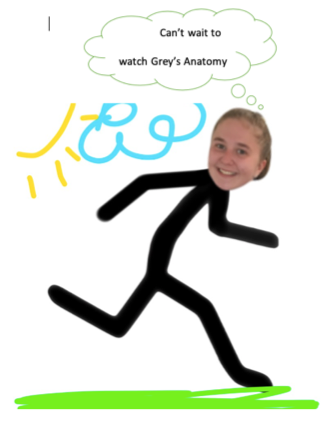
Another aspect of a game plan that is important, is creating strategies that help deal with problems that might occur on the day. This involves practising identifying problems before they affect my performance and also coming up with ways to deal with my mind going blank. I have been implementing this on longer runs which has helped me develop strategies for some distractions such as, my phone ringing which I now put on silent. However, I know for the marathon I may experience new problems as it is a new longer distance for me to run for example, I may hit the wall.
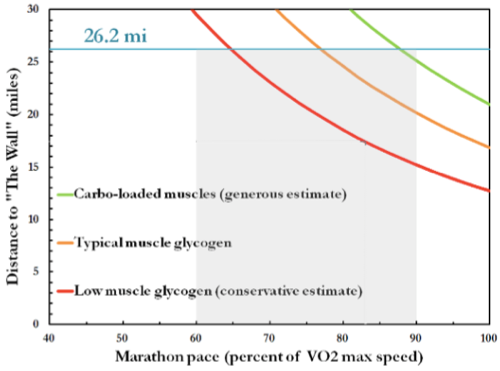
The wall occurs when there is a depletion of glycogen stores in the body and so your body has to switch to burning fat instead. Rapoport (2010) devised a model for tracking energy consumption of individuals running marathons. His model calculates the approximate time you may hit the wall. To calculate this, you divide your VO2 max pace (my pace 9:40 per mile) by your goal marathon pace (my goal pace 11:26) to get the intensity you will be running at (my intensity- 83%). Most runners run with a VO2 max of between 60-85% during a marathon. Using an example graph from RunnersConnect, I can predict that I will hit the wall around 22 miles with the typical amount of glycogen stored in my muscles. This means I can prepare for this and try to avoid it by taking on more glucose to help replenish my glycogen stores.
There has been research that training fasted has a lot of benefit towards longer races as it trains the body to burn fat more efficiently (Van Proeyen et al., 2010). I attempted this on a long run but had to abandon it earlier than planned due to feeling weak and shaky. To try and avoid hitting the wall, I have been working on my coping strategies whilst running. Morgan and Pollock (1977) showed that the cognition of runners is an important factor on the likelihood of hitting the wall. Brewer and Buman (2006, as cited in Bunman et al., 2008) showed that elite and non-elite runners use different strategies whilst running which affect performance. Elite runners prefer associative psychological states (e.g. direct attention to physiological signals and performance) whereas, non-elite runners prefer dissociative cognitive states (e.g. directing attention away from physiological signals). However, Stevinson and Biddle (1998) reported that dissociative cognitive states increase the likelihood of hitting the wall. You can have external and internal associative and dissociative attention. Stevinson and Biddle (1998) showed that inward association (e.g. monitoring physical signals such as, muscle soreness) had the highest risk of hitting the wall and inward dissociation (e.g. daydreaming) the least. Therefore, I have been practising using the different types of associative and disassociate strategies whilst I am running. During my long runs I use outward and inward dissociation to distract myself from my fatigue which also helps to make runs more enjoyable. I look at my surroundings much more and think about other things non-running related such as, jobs I have to do at home. However, after around 10 miles I begin to use inward association to make sure that I am not tiring myself out too much and that I am not injuring myself. I use inward association every so often so that the discomfort of running longer distances isn’t exaggerated.
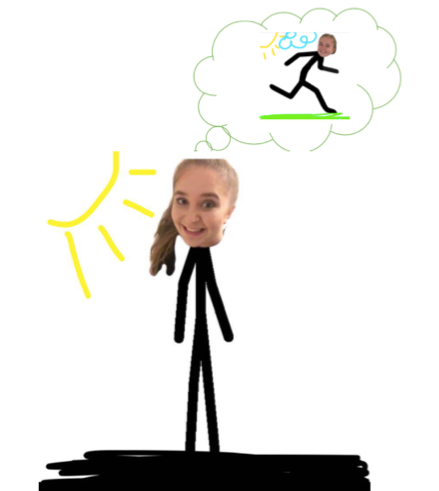
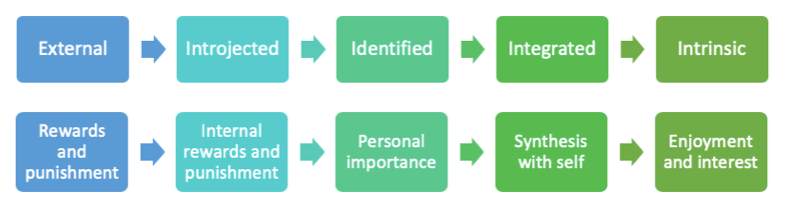
Also, to prepare for the marathon I’ve started to use visualisation before the race. Visualising the race will prepare me for what I’ve got to do and should reduce any performance anxiety so should calm me during the race (Newmark, 2012). It helps to maintain focus and increase my confidence during my training and running. I use visual and kinaesthetic visualisation so I know the route I am going to take and how I am expecting to feel at each point of the race (Ekeocha, 2015). This prepares me for running the whole marathon and so I know what to expect. Walker et al. (1999) showed that visualisation can be used to help pain management in cancer patients due to the relaxation. This may help for my marathon as any visualisation I do will promote relaxation which will reduce my stress and may help lessen pain I feel. Visualisation can also make race events more fun due less stress and anxiety (Newmark, 2012). This can increase my intrinsic motivation for running which would make engaging in training easier.
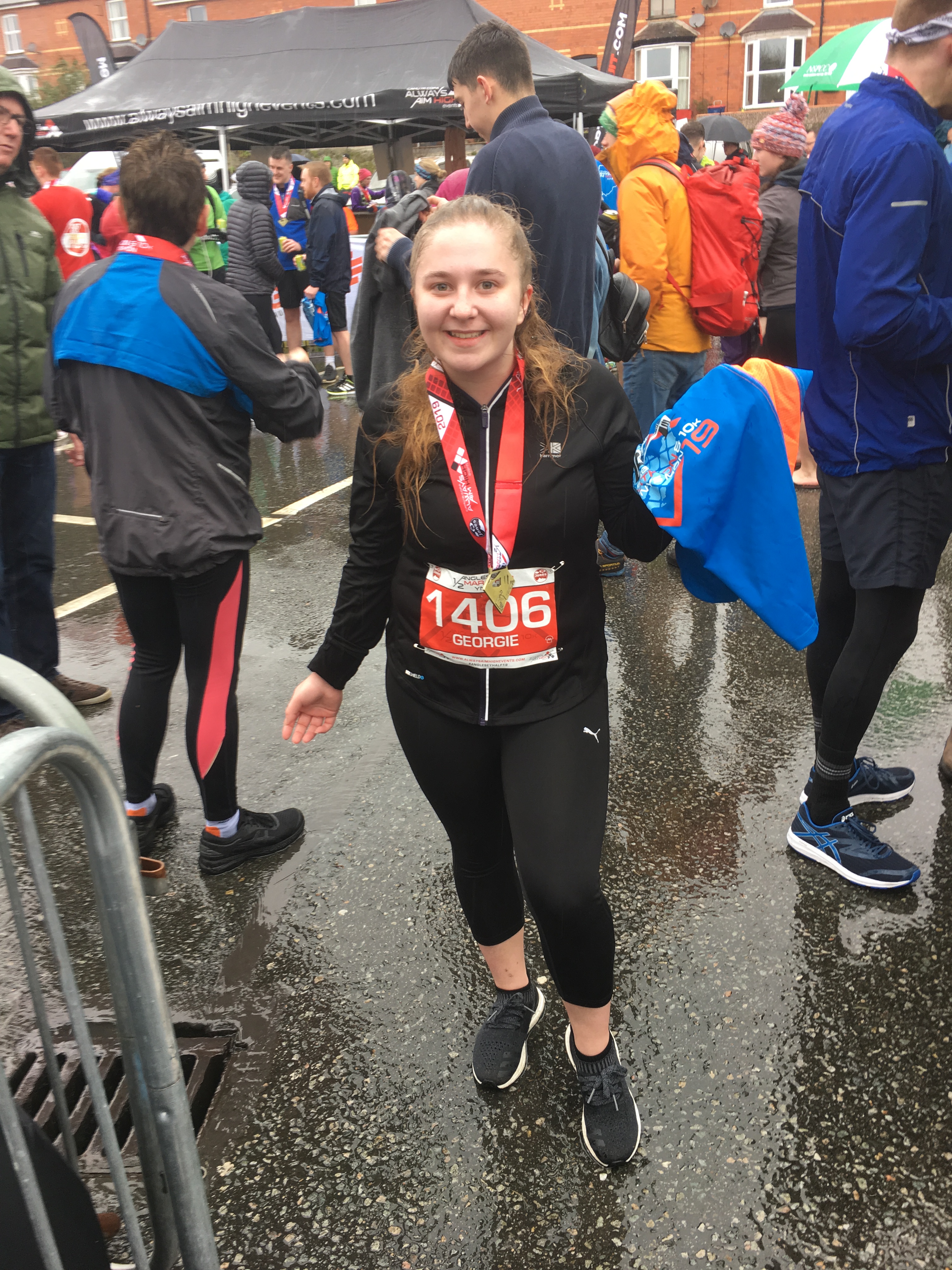
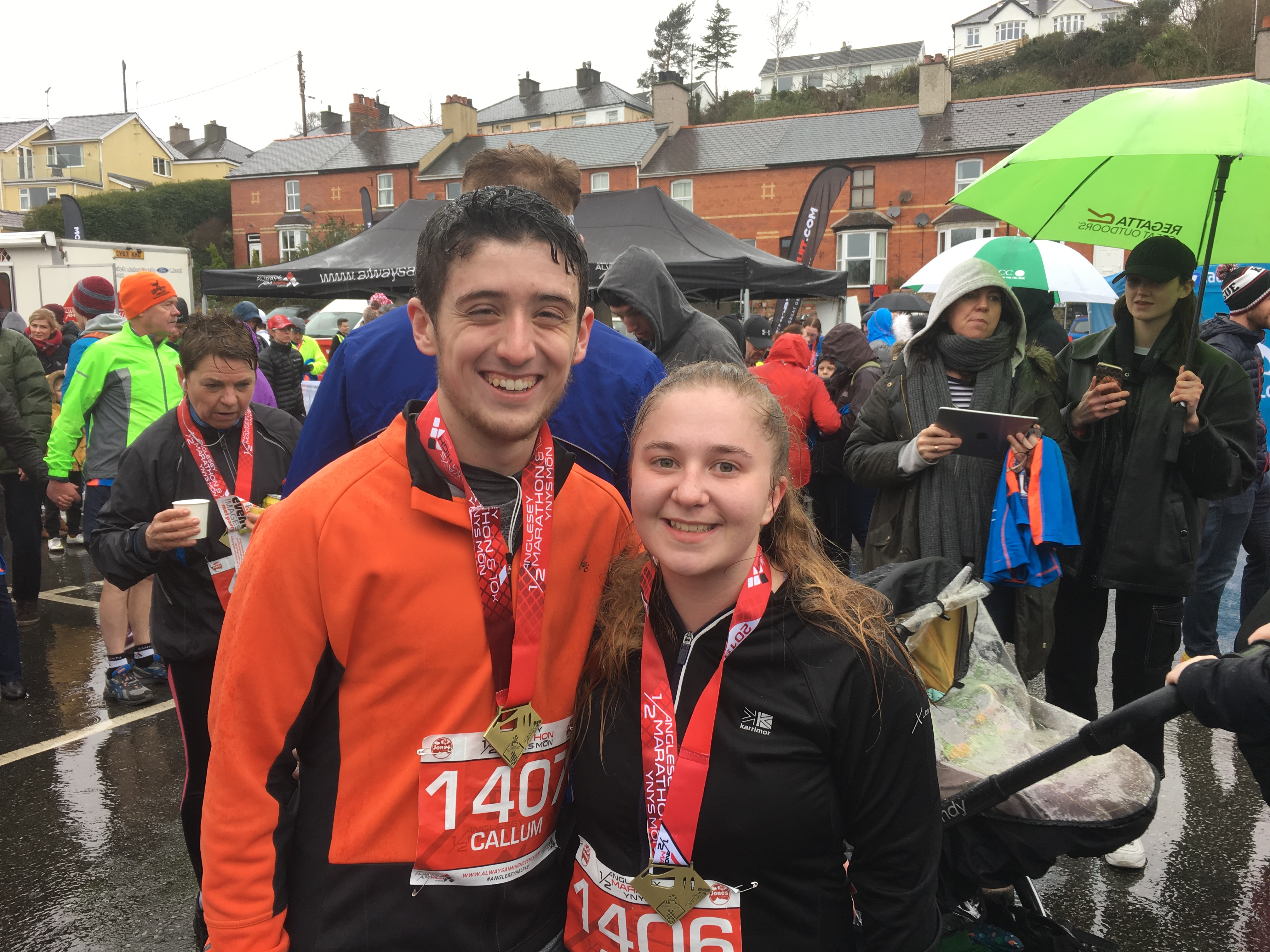
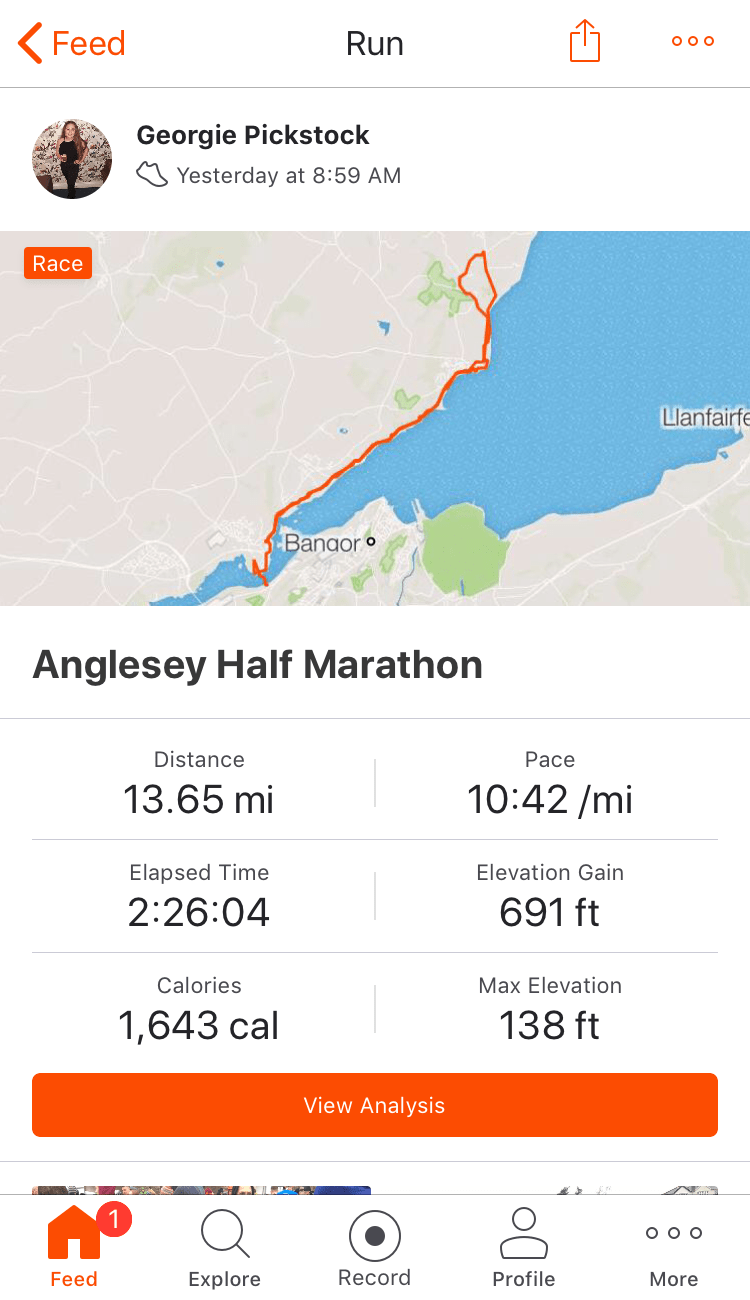
The final part of a game plan is to reflect after the race event has finished. This is important as you can learn from the performance and gain experience. Furthermore, if you look at what you did well it can boost your confidence and help you perform better in the future. For example, my confidence was boosted after my first half-marathon when I completed it in under 2 and a half hours which was my target time. This has helped me to keep training and working towards my goal of the Liverpool marathon.
Overall, having a game plan in place has helped me to prepare more for the marathon and feel more relaxed. It has allowed me to identify my weaknesses and develop coping strategies for any problems that might arise. It has mentally prepared me for problems such as, the wall.
References
Arruza, J. A., Telletxea, S., de Montes, L. G., Arribas, S., Balagué, G., Cecchini, J. A., & Brustad, R. J. (2009). Understanding the relationship between perceived development of the competition plan and sport performance: mediating effects of self-efficacy and state depression. Perceptual and Motor Skills, 109(1), 304-314.
Avolio, B. J., & Hannah, S. T. (2008). Developmental readiness: Accelerating leader development. Consulting Psychology Journal: Practice and Research, 60(4), 331.
Buman, M. P., Omli, J. W., Giacobbi Jr, P. R., & Brewer, B. W. (2008). Experiences and coping responses of “hitting the wall” for recreational marathon runners. Journal of Applied Sport Psychology, 20(3), 282-300.
Ekeocha, T. C. (2015). The Effects of Visualization and Guided Imagery in Sports Performance.
Hatzigeorgiadis, A., Zourbanos, N., Galanis, E., & Theodorakis, Y. (2011). Self-talk and sports performance: A meta-analysis. Perspectives on Psychological Science, 6(4), 348-356.
Morgan, W. P., & Pollock, M. L. (1977). Psychologic characterization of the elite distance runner. Annals of the New York Academy of Sciences, 301(1), 382-403.
Newmark, T. (2012). Cases in visualization for improved athletic performance. Psychiatric Annals, 42(10), 385-387.
Rapoport, B. I. (2010). Metabolic factors limiting performance in marathon runners. PLoS computational biology, 6(10), e1000960.
Stevinson, C. D., & Biddle, S. J. (1998). Cognitive orientations in marathon running and” hitting the wall”. British Journal of Sports Medicine, 32(3), 229-234.
Van Proeyen, K., Szlufcik, K., Nielens, H., Ramaekers, M., & Hespel, P. (2010). Beneficial metabolic adaptations due to endurance exercise training in the fasted state. Journal of applied physiology, 110(1), 236-245.
Walker, L. G., Walker, M. B., Ogston, K., Heys, S. D., Ah-See, A. K., Miller, I. D., … & Eremin, O. (1999). Psychological, clinical and pathological effects of relaxation training and guided imagery during primary chemotherapy. British journal of cancer, 80(1-2), 262.

 Georgie's Running Blog